Search
Contact
Whatsapp
Whatsapp
Book appointment
Book appointment
  • Dogs
    • Treatments
    • Happy Pet Health Plan
    • Advice and Information
    • Common Diseases
  • Cats
    • Treatments
    • Happy Pet Health Plan
    • Advice and Information
    • Cat Friendly Clinic
    • Common Diseases
  • Other pets
    • Treatments
    • Advice and information
    • Common Diseases
  • About us
    • Expertises
    • Our team
    • Vacancies
    • News
    • Contact
  • Clinics
    • Dierenkliniek Vondelpark
    • Dierenkliniek Spaarne
    • Kattenkliniek Sarphatipark
De Dierenkliniek > Dogs > Diseases > Hip dysplasua

Hip dysplasia

What is hip dysplasia in dogs?

Hip dysplasia (HD) is a condition affecting the hip joints that is unfortunately quite common in dogs. The term ‘dysplasia’ refers to abnormal development of a joint, meaning that the different parts of the joint do not fit together properly. This can cause pain and difficulty walking.

Hip dysplasia is most commonly seen in larger dog breeds, although it can occur in dogs of any size.

How does hip dysplasia develop in dogs?

A dog’s hip joints develop during the first 12 months of life. The hip joint consists of a rounded ball at the top of the thigh bone (femur), which fits into the hip socket. The joint is surrounded by synovial fluid, which helps the joint move smoothly. A strong joint capsule surrounds the joint and helps keep everything securely in place.

Normally, the ball fits snugly into the hip socket and the joint is stable. In dogs that are predisposed to hip dysplasia, however, the joint capsule may be too loose. This causes the hip joint to become unstable and the ball no longer fits properly into the socket.

The resulting movement within the joint can damage the cartilage, eventually leading to osteoarthritis. Over time, the joint capsule becomes thicker and less flexible, further reducing the range of motion in the joint. This can be a painful condition.
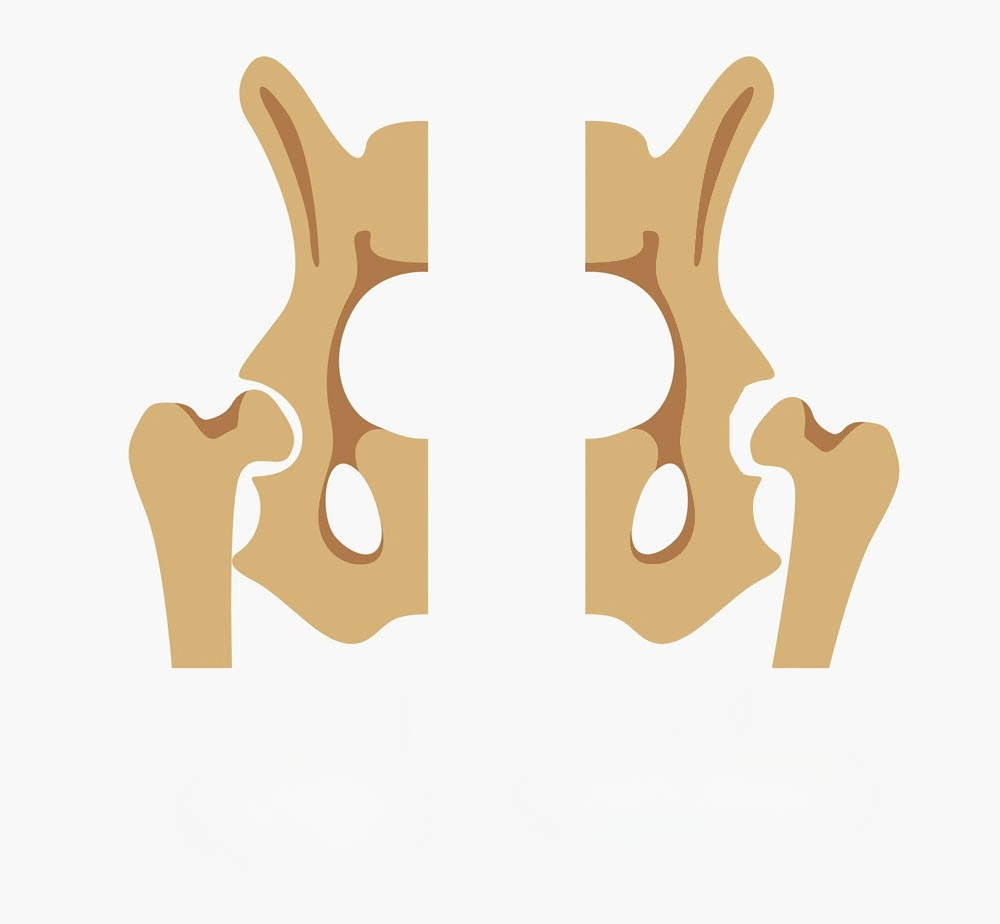
Left: normal hip joint. Right: Hip joint with dysplasia


The predisposition to excessive looseness in the hip joint is hereditary, but other factors can also influence the development of hip dysplasia. Too much or inappropriate exercise at a young age, rapid growth, being overweight and an unsuitable diet can all have a negative effect on the development of the hip joint.

Symptoms of hip dysplasia

Symptomen van heupdysplasie bij de hond kunnen voorkomen bij hele jonge, of juist bij oudere Symptoms of hip dysplasia can occur in both very young and older dogs. In young dogs, signs often start to appear between four and ten months of age. Common symptoms include:

  • Less interest in playing
  • Difficulty getting up
  • Sitting or lying down sooner than expected after exercise
  • Occasional lameness
  • A pronounced swaying gait

In dogs over six years of age, the most common symptoms include:

  • Stiffness when getting up
  • Reluctance to go for walks
  • Difficulty jumping and/or climbing stairs

Symptoms are often most noticeable when the dog first starts moving and may improve as the dog gets warmed up and moving.

Diagnosis

Hip dysplasia is diagnosed based on a physical examination and/or X-rays of the hips. It is important for your dog to remain completely still during the X-rays to obtain clear images, so a light sedative may sometimes be needed.

If your dog is showing any of the symptoms described above, we recommend taking X-rays of the hips, regardless of your dog’s age. If you want to have your dog screened for hip dysplasia as a precaution, it is generally better to wait until your dog has finished growing before taking the X-rays.

How is hip dysplasia treated?

There are several treatment options for hip dysplasia, including:

  • Orthopaedic surgery
  • Nutritional support and supplements
  • Physiotherapy and/or medication

The most appropriate treatment depends on the severity of the condition, as well as your dog’s age and overall health.

Do you have concerns about your dog’s hips or notice any of the symptoms described above? We are happy to help. Contact us or make an appointment with one of our veterinarians.

Hero Image

Happy Pet Health Plan

Learn more about the preventive healthcare plan we have specially developed for cats and dogs.

Read more

Nutritional advice
Ultrasound & X-ray
Orthopaedics
Dierenkliniek Vondelpark

Sophialaan 53
1075 BP Amsterdam
T: 020 6620101

Facebooktfacebook
instagram
linkedin
Dierenkliniek Spaarne

Jan van Goyenstraat 18
2102 CB Heemstede
T: 023 3036891

Facebook
instagram
linkedin
Kattenkliniek Sarphatipark

Karel du Jardinstraat 67-A1
1073 TB Amsterdam
T: 020 2246141

facebook
insstagram
linkedin
Book appointment or register as new client?

Easily book your appointment online, also if you are a new client. If you prefer to register as new client without booking your first appointment, click ‘Register new client’.

Book appointment
Register new client
©2023 – De Dierenkliniek
  • Frequently asked questions
  • General conditions
  • Our privacy policy

We use cookies to personalize content, provide social media features and analyze traffic. By clicking “Accept all” you agree to all types of cookies. You can manage your preferences via cookie settings.
Cookie settingsAccept all
Manage consent

Cookie settings

This website uses cookies to improve your experience while you navigate through the website. Out of these, the cookies that are categorized as necessary are stored on your browser as they are essential for the working of basic functionalities of the website. We also use third-party cookies that help us analyze and understand how you use this website. These cookies will be stored in your browser only with your consent. You also have the option to opt-out of these cookies. However, opting out of some of these cookies may affect your browsing experience.
Functional
Functional cookies help to perform certain functionalities like sharing the content of the website on social media platforms, collect feedbacks, and other third-party features.
Performance
Performance cookies are used to understand and analyze the key performance indexes of the website which helps in delivering a better user experience for the visitors.
Analytics
Analytical cookies are used to understand how visitors interact with the website. These cookies help provide information on metrics the number of visitors, bounce rate, traffic source etcetera.
Advertisement
Advertisement cookies are used to provide visitors with relevant ads and marketing campaigns. These cookies track visitors across websites and collect information to provide customized ads.
Others
Other uncategorized cookies are those that are being analyzed and have not been classified into a category as yet.
Necessary
Necessary cookies are absolutely essential for the website to function properly. These cookies ensure basic functionalities and security features of the website, anonymously.
CookieDurationDescription
cookielawinfo-checkbox-analytics11 monthsThis cookie is set by GDPR Cookie Consent plugin. The cookie is used to store the user consent for the cookies in the category "Analytics".
cookielawinfo-checkbox-functional11 monthsThis cookie is set by GDPR Cookie Consent plugin. The cookie is used to store the user consent for the cookies in the category "Functional".
cookielawinfo-checkbox-necessary11 monthsThis cookie is set by GDPR Cookie Consent plugin. The cookie is used to store the user consent for the cookies in the category "Necessary".
cookielawinfo-checkbox-other11 monthsThis cookie is set by GDPR Cookie Consent plugin. The cookie is used to store the user consent for the cookies in the category "Other".
cookielawinfo-checkbox-performance11 monthsThis cookie is set by GDPR Cookie Consent plugin. The cookie is used to store the user consent for the cookies in the category "Performance".
viewed_cookie_policy11 monthsThis cookie is set by GDPR Cookie Consent plugin and is used to store whether or not the user has consented to the use of cookies. It does not store any personal data.
SAVE & ACCEPT
Powered by CookieYes Logo