Dental problems in rabbits
Dental problems in rabbits are common. However, rabbits often show signs of discomfort only at a late stage. Dental issues can cause a rabbit to eat less or stop eating entirely. A rabbit that is not eating is an emergency. Therefore, it is important to recognize dental problems early and have them treated promptly.
What does a rabbit’s dentition look like?
A rabbit has four prominent incisors, which most people recognize because they are so noticeable. What fewer people know is that, in addition to these incisors, rabbits have 20 molars and two peg teeth. Peg teeth are small incisors that grow just behind the upper front teeth. Fun fact: peg teeth are unique to rabbits, which is why rabbits are not classified as rodents.
A rabbit’s teeth grow continuously throughout its life. With normal alignment of the molars and incisors, they wear down naturally through the chewing motion. When the teeth and molars wear properly, they maintain the correct length and do not cause any problems.
What dental problems occur in rabbits?
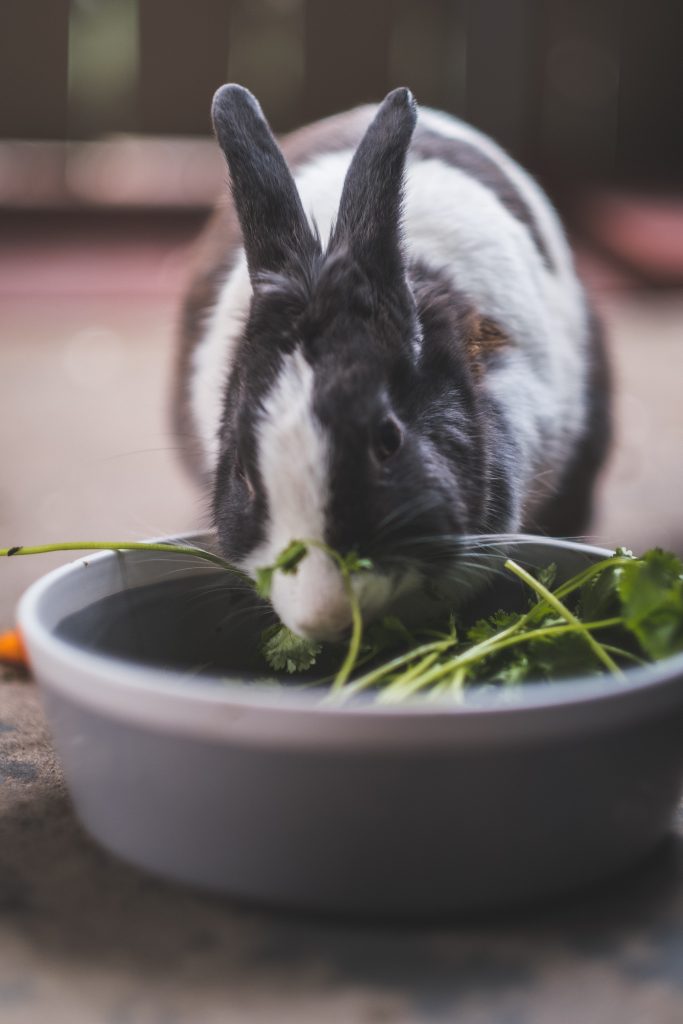
The most common dental problems in rabbits are overgrown incisors, spurs on the molars, and abscesses in the mouth.
Overgrown incisors
If a rabbit’s incisors are not properly aligned, they do not wear down naturally while chewing. The incisors become too long, making it difficult for the rabbit to eat. Overgrown incisors are also called “elephant teeth.” This problem is relatively easy to spot in rabbits.
Spurs on the molars
When there are alignment or wear problems with the molars, sharp points can develop that injure the tongue or the lining of the cheeks. This is very painful for the rabbit and prevents it from properly grinding its food. Molars are difficult to see in rabbits, so these problems are not always obvious.
Abscess
Sometimes, a tooth or molar can break due to trauma, or an infection may develop at the roots because of misaligned teeth. This can lead to an abscess in the rabbit’s mouth, which requires veterinary attention.
What are the symptoms of dental problems in rabbits?
Rabbits are prey animals and often hide signs of discomfort. You may recognize dental problems in your rabbit by the following symptoms:
- Eating less or having difficulty eating: The rabbit seems willing to eat but cannot manage it properly.
- Dropping or spitting out food: Food falls from the mouth while trying to eat.
- Avoiding certain types of food: The rabbit suddenly leaves specific foods untouched.
- Drooling: Fur around the mouth becomes wet, which can lead to skin irritation or bald patches.
- Eye inflammation or nasal discharge
- Abnormal droppings: Smaller, softer, or fewer fecal pellets.
- Swelling on the head: Often caused by abscesses.
- Weight loss
- Protruding front teeth
- Poor condition and coat quality
Early recognition of these signs is crucial to prevent further pain and complications.
How can I prevent dental problems in rabbits?
Nutrition plays a major role in preventing dental problems in rabbits. Providing the right amount of calcium is especially important. If a rabbit receives food with too little calcium, a calcium deficiency in the blood can occur. Low calcium levels can lead to bone loss in the jaw, which negatively affects the alignment of the teeth, molars, and roots, with all the associated problems.
However, too much calcium is also harmful. Excess calcium in the diet can increase calcium levels in the urine, leading to bladder sludge or bladder stones. For this reason, do not give your rabbit lick or chew stones.
A rabbit needs a well-balanced diet, consisting of plenty of hay, fresh greens, and pellet food. Additionally, spending time outdoors in the sun helps your rabbit produce vitamin D, which contributes to strong teeth and jawbones.
Dental treatment for your rabbit
We regularly perform dental treatments for rabbits. If you suspect that your rabbit is suffering from dental problems, please contact us or book an appointment online.
Our expertises
At our modern clinics, you can bring your pet for almost all types of veterinary treatments.
Read more