Weil’s disease in dogs
Weil’s disease, also known as leptospirosis, is a serious bacterial disease in dogs that can sometimes be fatal. A proper vaccination schedule for dogs can prevent this unpleasant disease.
What is Weil’s disease in dogs?
Weil’s disease is an infectious disease caused by Leptospira bacteria. The consequences of this infection for your dog can be very serious. Leptospirosis is a zoonosis, which means the disease can also be transmitted to humans.
There are many different serotypes of the Leptospira bacterium. The serotypes that most commonly affect dogs in the Netherlands are canicola and icterohaemorrhagiae. Fortunately, in the Netherlands, the disease is rare due to a good vaccination policy.
How do dogs become infected with leptospirosis?
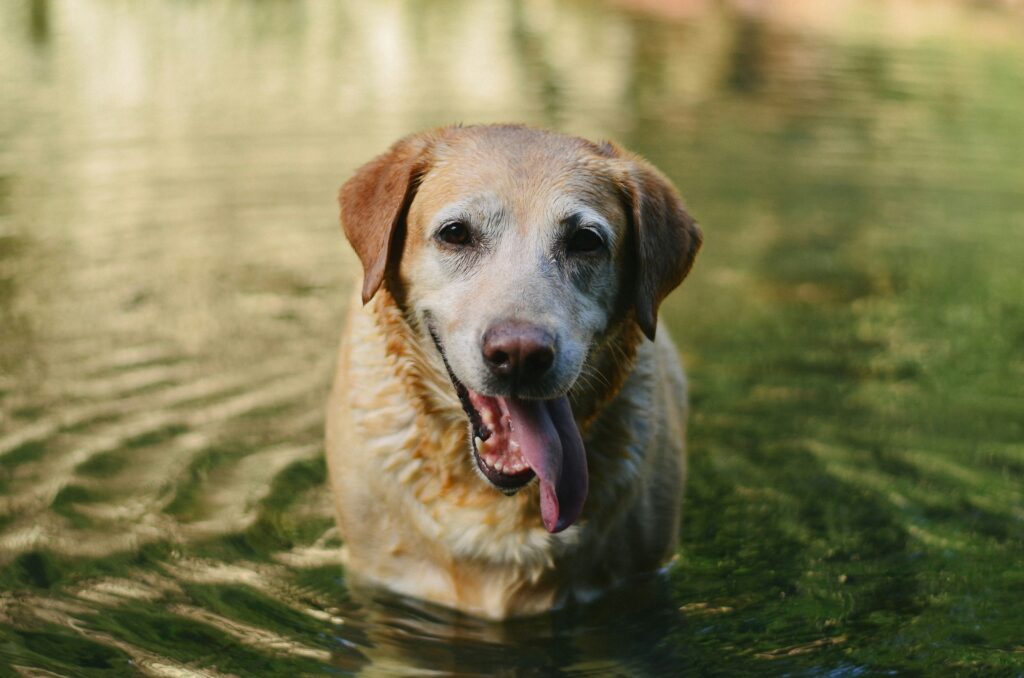
The Leptospira bacterium can be transmitted in several ways. Dogs can become infected through direct contact with infected animals (such as bite wounds or eating carcasses), but they can also acquire the disease indirectly, for example through stagnant water and mud puddles contaminated with the urine of infected animals. In stagnant or slow-flowing water and moist soil, leptospires can survive for months, especially if the ambient temperature is moderate to high. An important source of bacterial spread is the urine of infected rats.
Once the leptospires enter the bloodstream, they multiply. Through the bloodstream, they reach organs such as the liver and kidneys, causing severe damage by producing toxins. Due to the resulting kidney infection, the bacteria are excreted in large quantities in the urine, potentially infecting other animals.
Is Weil’s disease contagious to humans?
Humans can also become infected with Weil’s disease. Infection occurs in the same way as in dogs. However, there is no vaccine available to prevent the disease in humans. Therefore, it is especially important to be aware of the factors mentioned above to avoid infection. The symptoms that humans can develop from Weil’s disease are described in the following paragraph.
What are the symptoms of Weil’s disease?
The symptoms of Weil’s disease in dogs (and in humans) include:
- Lethargy/sleepiness
- Fever
- Yellow mucous membranes (jaundice)
- Increased drinking and urination
- Vomiting and diarrhea
- Joint and muscle pain
- Neurological abnormalities
- Damage to the mucous membranes
Diagnosis of Weil’s disease
Weil’s disease can be detected through a blood test. This test measures the body’s immune response (antibodies) to the bacterium. A challenge with this is that a vaccinated dog will also have antibodies. In vaccinated dogs, an active infection can therefore only be confirmed by a rise in antibody levels, which may require repeating the blood test. The bacterium can also be detected in urine. Unfortunately, not every urine sample from an infected animal contains leptospires.
How do we treat Weil’s disease?
A dog with Weil’s disease must be treated as quickly as possible. First, they receive antibiotics to fight the infection. In addition, we provide fluid therapy to limit damage to the liver and kidneys and to restore fluid balance. We also treat specific symptoms in the dog, such as medication for vomiting and/or diarrhea.
Prevention
Preventive care in the form of vaccination is the best way to protect your dog against leptospirosis. To maintain optimal protection, vaccinations need to be repeated. For dogs, vaccination against Weil’s disease starts at 9 and 12 weeks of age. The vaccination is then repeated at 1 year of age and subsequently every year. You can find this in our vaccination schedule.
In addition to vaccination, it is advisable—especially during the warmer months—to prevent your dog from drinking or swimming in warm, stagnant water, or coming into contact with wild rodents or carcasses.
Want to learn more about this topic? Feel free to contact us or make an appointment directly.

Traveling with your dog
What could be better than taking your loyal four-legged friend on vacation? Read here everything you need to know before you hit the road!