Kennel Cough in Dogs
During our consultations, we often see dogs with coughing. One possible and common cause of this is kennel cough.
What Is kennel cough in dogs?
Kennel cough is a contagious inflammation of the upper respiratory tract (nose, throat, and windpipe), which can be caused by various types of viruses and bacteria, including parainfluenza virus and the bacterium Bordetella bronchiseptica.
How does your dog catch kennel cough?
The name “kennel cough” originated because the condition spreads easily and quickly in kennels. Unfortunately, this does not mean that dogs cannot catch it elsewhere. Dogs are mainly infected through direct contact with other dogs that have kennel cough, which can happen anywhere. Infection can also occur through indirect contact, though this is less common. Usually, a dog develops symptoms three to ten days after exposure. A dog with kennel cough is contagious to other dogs for about a week.
Is kennel cough contagious to humans or other animals?
Kennel cough is highly contagious among dogs. For most people, however, kennel cough is harmless. People with chronic respiratory problems or weakened immune systems (for example due to chemotherapy or AIDS) can become ill from the Bordetella bacterium. Cats can also become infected with Bordetella, which can cause sneezing or pneumonia, although this is generally rare.
What are the symptoms of kennel cough in dogs?
Not all dogs infected with kennel cough become sick. Some dogs may only have a runny nose, while others experience a harsh, dry cough that can trigger gagging, as if something is stuck in the throat. Some dogs may also develop watery or inflamed eyes. In rare cases, pneumonia can occur, but this is very uncommon.
How is kennel cough diagnosed?
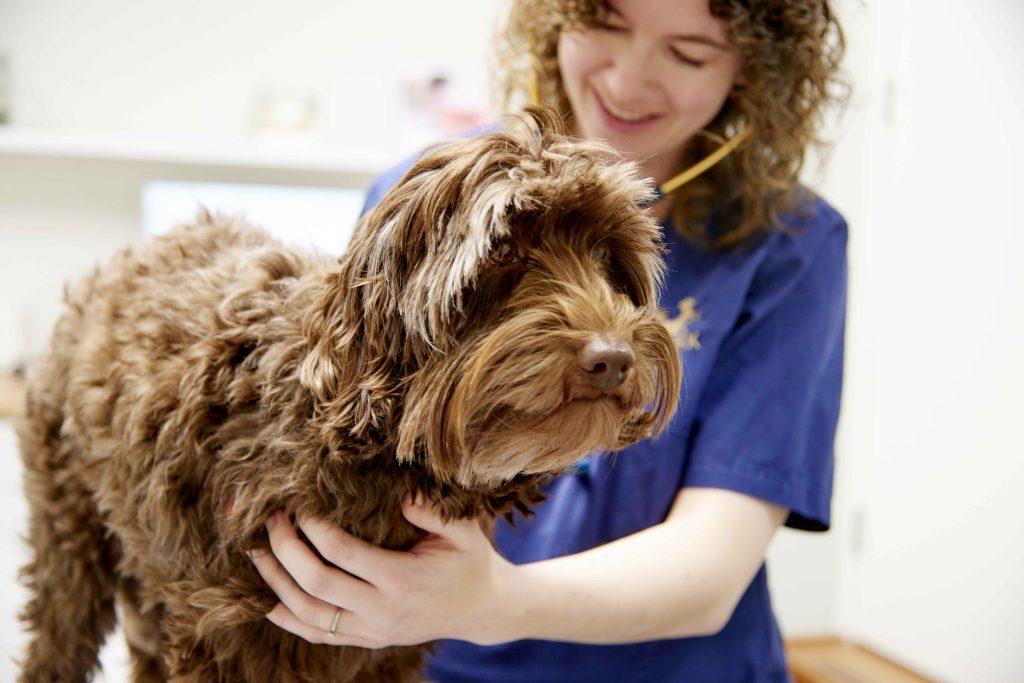
The diagnosis is based on symptoms and a physical examination. If your dog has a dry, hacking cough, sometimes accompanied by coughing up clear or whitish mucus, it is advisable to have your dog examined. During the physical exam, dogs often cough when gentle pressure is applied to the windpipe, and some may have a slightly elevated body temperature. If kennel cough is indeed present, your dog will generally remain alert and eat well.
Treatment
The treatment of kennel cough is determined based on the symptoms and physical examination. Often, a combination of medication (such as anti-inflammatories and sometimes a mucolytic and/or cough syrup) and simple adjustments (like rest and a harness) is needed. Kennel cough can cause irritation of the airways, and a collar can then be uncomfortable on the throat, making a harness more suitable. Antibiotics are generally not necessary, and suppressing the cough with antitussives can actually be counterproductive.
Vaccination against kennel cough
There is a vaccination available against kennel cough, which can be given either subcutaneously or as a nasal spray. The nasal spray works faster (within 3–5 days) and provides immediate protection at the site where the pathogens enter, namely the nose. This is the type of vaccination provided at De Dierenkliniek.
Even with vaccination, a dog can still become infected with kennel cough. This is because the vaccine protects against the most common pathogens (parainfluenza and Bordetella). Unfortunately, there are other pathogens that can cause the same symptoms, such as canine respiratory coronavirus, canine herpesvirus, Mycoplasma spp., and Streptococcus zooepidemicus, for which no vaccine is available.
Of course, there are many other reasons a dog may cough. If the cough persists for more than three days or if other symptoms are present, we always advise having the dog examined by a veterinarian.
Questions? Please don’t hesitate to contact us!