
Ear Infection in Dogs
What is an ear infection in dogs?
Ear infections are fairly common in dogs. An ear infection occurs when the skin of the ear canal becomes inflamed. When this happens, the skin swells, and the ear canal can gradually become narrower. This makes it difficult for earwax deeper in the canal to move out, causing it to build up. The accumulation of wax creates an ideal environment for bacteria and yeast to grow, which can make the infection worse.
What are the symptoms of an ear infection in dogs?
If a dog has an ear infection, the following symptoms are often observed:
- Shaking the head
- Scratching at the ear
- Foul-smelling ear
- Discharge from the ear
- Rubbing the head against furniture or the floor
An ear infection is an uncomfortable and painful condition. It is important to identify the cause and treat it as quickly as possible. In some cases, frequent head shaking can lead to a hematoma (blood-filled swelling) in the ear.
What can cause an ear infection in dogs?
Several factors can increase the risk of an ear infection in dogs:
- Breed and anatomy: Some dogs produce more earwax than others, such as the Labrador Retriever and Cocker Spaniel. Dogs with naturally narrow ear canals, like the Shar Pei, or dogs with a lot of hair in their ears, like the Poodle, are also more prone to ear infections.
- Moist ears: Dogs that swim frequently or have their ears cleaned often are more susceptible to ear infections.
- Foreign objects: Items like grass seeds can get stuck in the ear, especially during warmer seasons.
- Ear mite infection: This is most common in puppies.
- Tumors or polyps: Rarely, these can cause ear problems.
- Allergies: In the majority of cases (about 43%), inflammation of the ear canal skin is caused by an underlying food or environmental allergy.
Diagnosis of an ear infection
To determine whether your dog has an ear infection, we will examine the ear canal using an otoscope. This allows us to look deep into the ear canal and carefully check for any foreign objects, ear mites, the condition of the ear canal skin, and whether the eardrum is damaged.
In addition to examining the ear canal with an otoscope, we usually take a sample. This sample is examined under a microscope, and the treatment is determined based on the findings.
How do we treat an ear infection?
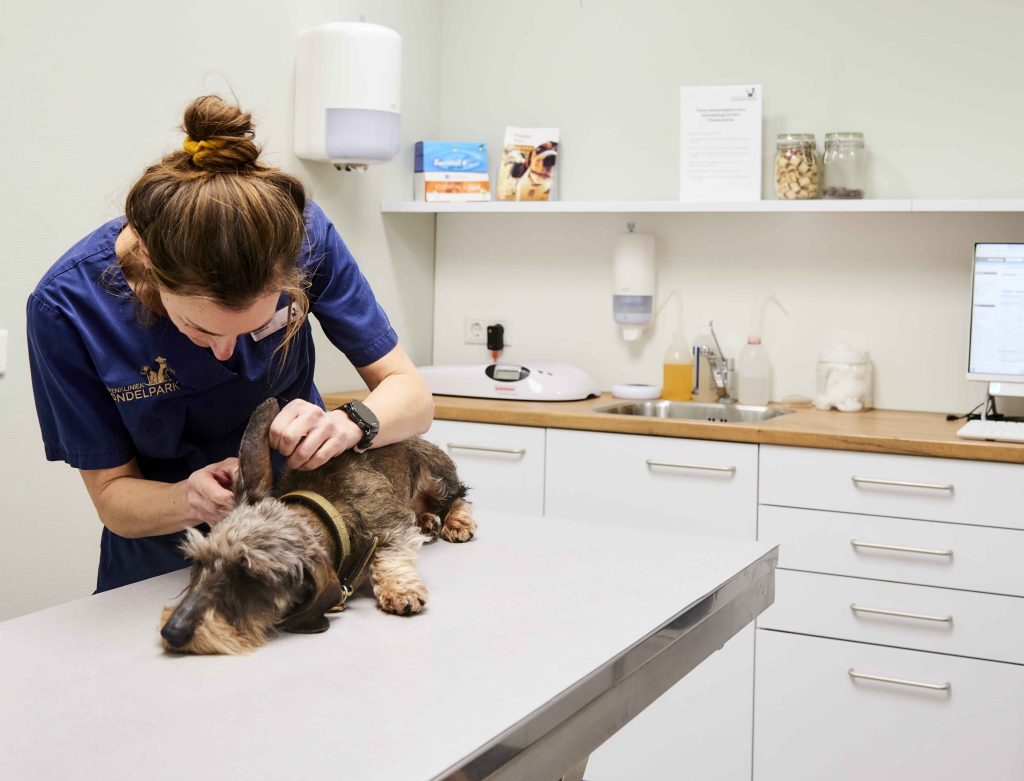
If there is a foreign object in the ear, it must be removed as quickly as possible. If the ear infection is caused by ear mites, we can treat it with an ear ointment or an anti-mite spot-on applied to the neck. If the infection is caused by an overgrowth of bacteria or yeast, we treat it with a medicated ear ointment. Most ear infections heal well with the proper treatment.
What to do with a recurring ear infection?
A possible cause of a recurring ear infection in dogs is applying the ear ointment for too short a period or not deeply enough. It can also happen that the bacteria or yeast causing the infection are not sufficiently sensitive to the antibiotic in the ointment.
If the ear infection continues to recur despite correct treatment with ear ointment, it is very likely caused by an underlying food or environmental allergy. It is important to treat this allergy, because otherwise the ear infection will keep coming back.
Preventing ear infections
There are several steps that can help prevent ear infections in your dog:
- Dry the ears after swimming or washing.
- If your dog produces a lot of earwax, clean the ears weekly or every other week using a mild ear cleaner specifically made for dogs. Never use a cotton swab, as this can push the wax deeper into the ear or damage the ear if your dog moves suddenly.
- Avoid handling your dog’s ears unnecessarily, as this can cause irritation or stimulate more earwax production.
- Always try to identify the underlying causes. For example, you can keep a diary to see if there is a connection between diet, behavior, activities, and the development of ear infections.
Aftercare for an ear infection
The disappearance or reduction of symptoms alone does not indicate that the ear infection has fully healed. It is therefore very important to come in for a follow-up appointment after one week, even if your dog no longer shows any symptoms.
During the follow-up, we can examine the ear again to assess whether it has healed properly. In some cases, the underlying cause, such as a polyp or tumor, may only become visible at this appointment, as it was initially hidden beneath debris.
If the ear infection has not sufficiently improved after treatment, we may take a swab during the follow-up and send it to the laboratory. The lab will identify the bacteria or yeast present and determine which antibiotics are effective.
If you have any questions about this topic, do not hesitate to contact us.
High-quality veterinary care
We can provide almost all primary and secondary veterinary care and continuously invest in the latest knowledge and expertise.