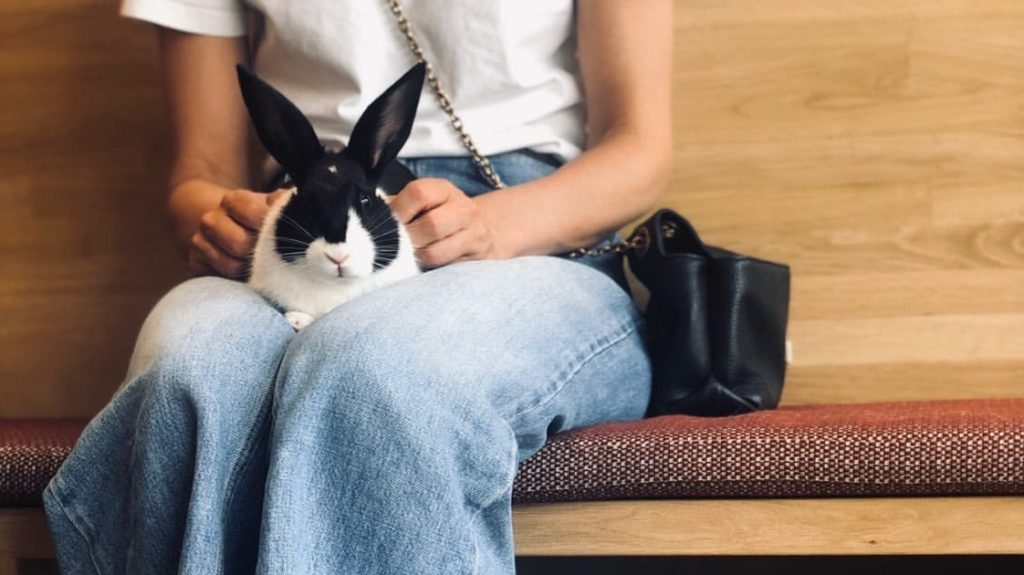
Neutering of your rabbit
Why choose to neuter your rabbit?
In male rabbits, also called bucks, the hormone testosterone can cause unwanted behaviors such as urine marking and aggressive or dominant behavior. Neutering can help reduce these behaviors and stop urine marking. It also prevents the buck from impregnating a female rabbit, known as a doe.
Male rabbits can be neutered around 4 to 5 months of age. At this stage, the testicles are fully descended and the rabbit is nearly fully grown. Keep in mind that rabbits can remain fertile for up to about 4 weeks after neutering.
Does a rabbit need to fast before neutering?
For most animals, fasting is required before surgery. This is not the case for rabbits! Rabbits cannot vomit, and it is essential that their digestive system keeps moving. So let your rabbit eat as usual. We will also ask you to bring a “lunch pack” for your rabbit, including their regular food and favorite treats.
How is rabbit neutering performed?
Before we put your rabbit under anesthesia, the veterinarian will perform a physical examination. If everything is normal, your rabbit will be anesthetized. To keep your rabbit warm, they are placed on a heating mat. The rabbit is then shaved and sterilized. During the procedure, your rabbit receives pain relief and an injection to prevent the digestive system from slowing down. A tube is placed in the airway so we can connect your rabbit to the monitoring equipment and provide oxygen and gas anesthesia.
After the surgery, your rabbit receives an injection to help them wake up quickly and is placed in a comfortable, warm enclosure. We will call you to let you know how the procedure went. Once their temperature is stable and they are eating again, they can be picked up.
If your rabbit has a bonded partner, we ask that you bring their companion as well. Rabbits recover much faster from anesthesia when they have familiar company.
Post-operative care
Make sure your rabbit can continue recovering in a warm environment. Avoid using straw or other bedding on the floor; instead, you can place a clean towel in the enclosure. It is very important that your rabbit continues to eat, so keep a close eye on them. We will call you the next day to check how your rabbit is doing after the surgery.
If you have any questions about this, please don’t hesitate to contact us!
Also interesting