
Diabetes (diabetes mellitus) in dogs
What is diabetes in dogs?
Diabetes Mellitus, or diabetes, is a condition in which the dog’s body produces little or no insulin. Insulin regulates the blood sugar level, or glucose level, in the blood. Because no insulin is produced, the glucose level in the blood is not lowered, and remains continuously too high. This results in several symptoms, which we discuss below.
How does diabetes develop in dogs?
Diabetes in dogs can have several causes. Possible causes include:
- Genetic predisposition / hereditary conditions
- Medication use (for example, long-term use of prednisone)
- A consequence of another condition (as we often see with Cushing’s disease or with acute or chronic pancreatitis)
- Infections
- Idiopathic (with no identifiable cause)
What are the symptoms of diabetes in dogs?
Dogs show several clear symptoms. The most noticeable is often that the dog needs to urinate frequently and in large amounts. As a result, they also drink considerably more. They are very hungry, yet lose weight and muscle mass. Some also develop a dull, wool-like coat. A small number develop cataracts in one or both eyes.
Dogs that are not treated in time stop eating and become lethargic. Sometimes they will also start vomiting. This can be ketoacidosis, which is an emergency! Please make an appointment promptly if you recognize these symptoms.
How do you test a dog for diabetes?
The diagnosis of diabetes can be ruled out or confirmed by carrying out both urine and blood tests. These look at the amount of glucose present in the urine and blood. We know that stress can cause a temporary rise in blood glucose, which can distort the results. That’s why we will always recommend an additional test when glucose levels are elevated. This test is called fructosamine, and tells us whether the glucose has been elevated over a longer period (2-3 weeks or more), or only briefly due to the stress of the visit to the practice and the blood draw. If the fructosamine level is also elevated, we speak of a dog with diabetes.
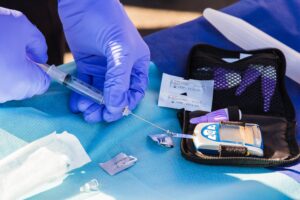
Treatment of diabetes in dogs
Treating diabetes is intensive and often consists of several components:
1) Administering insulin to the dog
Your dog needs an insulin injection twice a day, at the same time each day. Caninsulin® is registered for the treatment of diabetes in dogs. We can teach you how to do this.
2) Monitoring glucose levels
The glucose level must be checked regularly (using one drop of blood from the ear or lip). This is needed to determine what insulin dose your dog needs. Initially, these checks need to happen twice a week. Once the dog is stable, they can be reduced to monthly. Some owners measure the value themselves at home and then call to discuss it, which saves you many visits to the practice. Once the values are stable, we recommend having a check-up with a veterinarian 4 times a year.
An adjusted diet
Eating raises the amount of sugar in the blood. If your dog has diabetes, nutrition is therefore an important part of the treatment. There are special foods available on the market for dogs with diabetes. It is wise to start using these as soon as possible. In addition, it is good to feed your dog twice a day. Give the food at roughly the same time each day, and in the same amounts. This is to keep fluctuations in glucose levels to a minimum. If your dog receives insulin twice a day, you can give this injection right after the meal. If your dog receives insulin once a day, give the second meal 7 hours after the first injection.
3) A regular exercise pattern
A regular exercise pattern is important. Just like with feeding, exercise also affects glucose needs and therefore insulin needs. If the exercise pattern is irregular, the glucose and insulin needs will be irregular as well.
4) Treating underlying causes
Diabetes can be a consequence of another condition, such as Cushing’s disease. It is therefore important to investigate the cause of the diabetes and to treat any underlying illnesses or conditions.
Complications of diabetes
Hypoglycemie
Hypoglycemia, or a “hypo,” means that the blood sugar level is too low. This can happen, among other things, because the dog received too much insulin per injection, received insulin but did not eat, or exerted itself heavily (which uses up more sugar). Symptoms include: restlessness or, conversely, lethargy, collapsing/making odd movements, increased hunger, and trembling.
A hypo in a dog can be life-threatening; it is essential that the blood sugar level rises again as quickly as possible. Give a meal or a glucose (dextrose) solution immediately. The recommended amount is about 1 gram of glucose per kilogram of body weight. Place this in the cheek or under the tongue. If you see no immediate improvement after giving a meal or glucose, it is important to contact the veterinarian right away.
Ketoacidoses
Ketoacidosis is a dangerous condition that can develop with diabetes. It can occur if too little insulin has been given for a long time, or if it goes unnoticed that the dog has diabetes. Due to the prolonged insulin shortage, too little sugar reaches the cells, leaving them short on energy. To obtain energy anyway, the body starts breaking down fat. From the breakdown products released in this process, the liver forms ketones. These make the blood “acidic,” which causes various complaints and problems. Symptoms include nausea, loss of appetite, lethargy, a risk of vomiting, and dehydration. The dog’s breath may also start to smell different, specifically like acetone. Ketoacidosis is an emergency. If you suspect your dog has this, always contact the veterinarian immediately.
Can a dog be cured of diabetes?
Diabetes Mellitus is a chronic disease. This means, unfortunately, that your dog cannot be cured of it.
Prognose for diabetes
The prognosis for diabetes is good, provided the dog is treated consistently and is regularly monitored by both the veterinarian and the owner. A dog with diabetes requires a great deal of discipline from the owner and regular contact with the veterinarian. When the dog is properly monitored and receives insulin as prescribed, they can lead a long and good-quality life!
Do you have more questions about this topic? Feel free to contact us or make an appointment!

Our close-knit and experienced team is our driving force
We of course all share a passion for animals, but read here to find out what else you didn’t know about us…