
Travel Sickness in Dogs
What causes travel sickness in dogs?
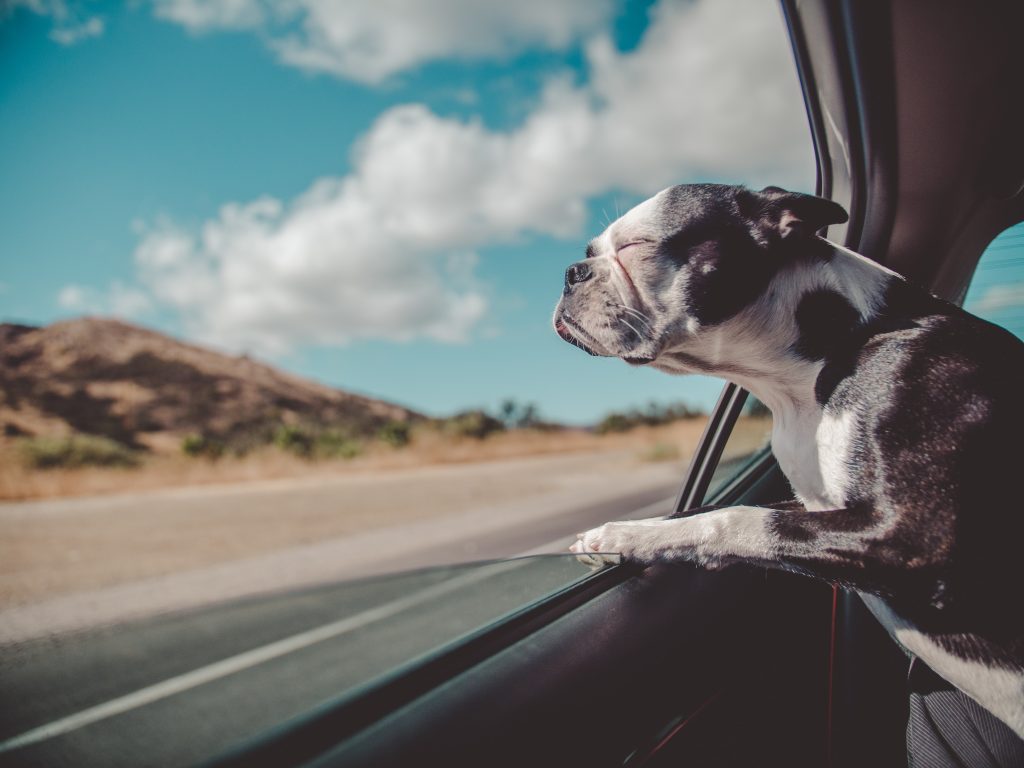
Travel sickness occurs when the movement detected by your dog’s vestibular system during travel does not match what their eyes perceive. This mismatch creates conflicting signals in the brain, resulting in nausea and, in some cases, vomiting.
Travel sickness can affect dogs of all ages, but puppies and young dogs are particularly susceptible because their vestibular system is not yet fully developed. Fortunately, many dogs partially or completely outgrow travel sickness as they mature.
What are the symptoms of travel sickness?
Common signs that may indicate your dog is suffering from travel sickness include:
- Excessive drooling
- Anxiety
- Restlessness
- Nausea
- Trembling
- Vomiting
Not every dog that pants or appears restless in the car is suffering from travel sickness. Some dogs are anxious about travelling due to a previous negative experience or because they have not yet become accustomed to car journeys. Travel sickness and anxiety can also occur together. We are happy to help determine what is causing your dog’s symptoms and advise you on the most appropriate treatment.
How can you prevent travel sickness?
Travel sickness can be so distressing that some owners feel they have no choice but to leave their dog at home. Fortunately, travel sickness can often be prevented or significantly reduced with behavioural training and/or medication.
Behavioural Training
For some dogs, behavioural training can help make travelling by car a more positive experience. This is particularly beneficial if your dog experiences anxiety or stress in addition to travel sickness. Gradually helping your dog become accustomed to the car can reduce anxiety over time. Please keep in mind that behavioural training requires patience, consistency, and regular practice.
Medication for travel sickness in dogs
When behavioural training alone is not sufficient, medication can be an effective solution. Several veterinary medicines have been specifically developed to prevent nausea and vomiting associated with travel sickness in dogs.
One of the most commonly prescribed medications is Cerenia® (active ingredient: maropitant). For optimal effectiveness, Cerenia® should be administered a few hours before travel. It is available as tablets and is only available on prescription from your veterinarian.
Never give your dog medication for travel sickness without first consulting your veterinarian.
Tips for making travel more comfortable
Below are some practical tips to help make travelling with your dog as comfortable and enjoyable as possible.
Before you travel
- Avoid giving your dog a large meal immediately before travelling. A light meal 2 to 3 hours before departure is usually better tolerated.
- Take your dog for a walk before setting off.
- Bring along a familiar blanket or favourite toy.
- Gradually build up to longer car journeys by starting with short, positive trips.
During the journey
- Keep a window slightly open to provide fresh air during the journey.
- Drive smoothly and avoid sudden braking or rapid acceleration whenever possible.
- Make sure the temperature inside the car is comfortable and not too hot or too cold.
- Take regular breaks so your dog can stretch their legs and have a drink of water.
- Never leave your dog unattended in a parked car, as temperatures can rise to life-threatening levels within minutes.
- Always transport your dog safely by using a travel crate or a properly fitted dog car harness.
Try to minimise stress as much as possible during the journey. Positive travel experiences help your dog develop confidence and make future trips more enjoyable.
Would you like to learn more about travel sickness in dogs or find out which treatment is most suitable for your dog? Please don’t hesitate to contact us. Our team will be happy to advise you.